
#20: The Meteoric Rise of China’s Live Streaming Industry
China's live streaming market is a colossal $695 billion industry, with over 700 million active users – that's nearly twice the population of the United States!


Ever bought something online after watching a live video of someone showcasing it? If so, you've experienced a taste of the live-streaming revolution.
But hold onto your hats because China's live streaming market is a colossal $695 billion industry, with over 700 million active users – that's nearly twice the population of the United States!
Welcome to the dynamic world of China’s live-streaming e-commerce, a digital phenomenon reshaping entertainment, commerce, and social interaction.
In this edition of "Decoding The Dragon," we will broadcast the evolution of this vibrant sector, highlighting its mammoth players and the ripple effects felt around the globe.
Broadcasting the Past: A Historical Tapestry of Evolution
The roots of China’s live streaming fervour trace back to the early 2010s when platforms like YY began to experiment with real-time video content.
Initially focused on gaming and entertainment, these platforms provided a stage for users to showcase talents from singing to live commentary, attracting a burgeoning viewer base eager for interactive content.
But, by 2015, the landscape had evolved with the entry of giants like DouYu and Huya, which capitalized on the exploding popularity of esports and interactive gaming.
These platforms not only provided live broadcasting but also enabled real-time interactions between streamers and viewers, creating a deeply engaging user experience.
The investment in bandwidth and streaming technology during this period was colossal, setting the stage for even broader content offerings.
However, the landscape transformed with the advent of e-commerce giants like Alibaba and JD.com integrating live streaming into their platforms.
This fusion of entertainment and shopping created a unique and engaging consumer experience, sparking an unprecedented surge in live streaming's popularity.

Today’s Broadcast: The 2023 Live Streaming Ecosystem
Fast forward to 2023, and live streaming has become an integral part of Chinese daily life.
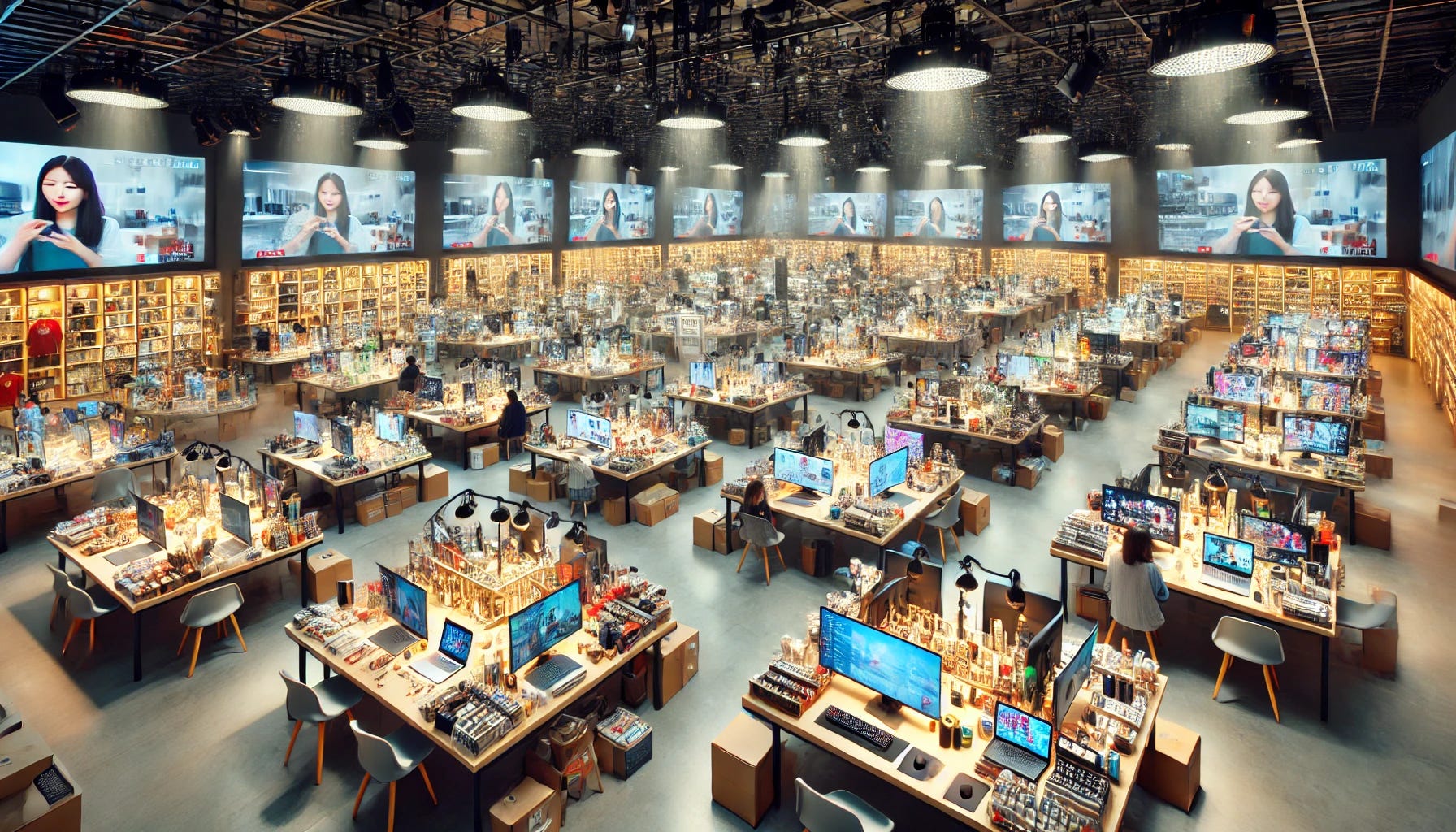
The Chinese live-streaming industry is a complex matrix of entertainment, social media, and e-commerce.
Live streamers, often charismatic individuals with massive followings, have become modern-day celebrities, influencing consumer behaviour and driving sales like never before.
Leading the charge are platforms like DouYu, with over 165 million active users, and Kuaishou, which reported revenues nearing $12 billion last year.
These platforms have transcended traditional media, offering everything from fashion shows to live cooking classes and even virtual e-commerce where viewers can purchase items in real-time.
And, in 2023, live-streaming e-commerce accounted for a staggering 15% of total online sales in China, a testament to its immense influence on the retail landscape.

..
Key Players: Leading the Charge in the Live Streaming Arena
Several platforms and personalities have emerged as frontrunners in China's live-streaming ecosystem.
Taobao Live: Owned by Alibaba, Taobao Live is the largest live-streaming e-commerce platform in China. In 2023, it generated over $77 billion in gross merchandise value (GMV), hosting a diverse range of live streams, from fashion and beauty to electronics and home goods.
Douyin: Known as TikTok outside of China, Douyin has also embraced live streaming with remarkable success. Its unique algorithm and focus on user-generated content have attracted a massive and engaged audience. In 2023, Douyin's live-streaming GMV surpassed $50 billion, fueled by its popularity among younger demographics.
Kuaishou: Initially known for its focus on rural users and grassroots content, Kuaishou has expanded its reach and diversified its content offerings. It's a popular platform for e-commerce, particularly for agricultural products and local specialities. In 2023, Kuaishou's live-streaming GMV reached $35 billion, reflecting its strong appeal among rural and lower-tier city consumers.
Austin Li (Li Jiaqi): Dubbed the "Lipstick King," Austin Li is a top live streamer renowned for his charismatic personality and ability to sell vast quantities of cosmetics in minutes. His live streams regularly attract millions of viewers, and his influence on the beauty industry is undeniable.
Viya (Huang Wei): Another top live streamer, Viya, is known for her diverse product range and engaging live streams. She's sold everything from snacks to rockets on her live streams, showcasing the platform's versatility and reach.
These are just a few of the prominent players shaping China's live-streaming landscape. Numerous other platforms, streamers, and agencies contribute to the industry's vibrancy and dynamism.
Now, consider this:
In India, Meesho has an annual GMV of $5 billion.
Flipkart group as a whole has an annual GMV of $30 billion.
And now consider China, where the GMV from live-streaming-driven e-commerce alone is larger than that of Flipkart’s wholesome GMV for almost every major player.
This is crazy!

Global Impact: A Wave of Innovation Sweeping Across Borders
The influence of China's live-streaming revolution is rippling across the globe.
E-commerce giants like Amazon and Facebook have launched their own live-streaming features, inspired by the success of Chinese platforms.
Instagram, Twitch and YouTube are also integrating similar features to capitalize on user engagement. And, brands are also increasingly leveraging live streaming to engage with consumers, showcase products, and drive sales.
This is all happening because China has shown that live streaming is reshaping consumer behaviour, boosting e-commerce sales, and creating new opportunities for businesses and individuals alike.
It's thus evolved into a phenomenon that's transcending borders and transforming the way we shop and interact online. Thus, the impact on the global economy is significant.
Moreover, Chinese technologies in streaming and data handling are setting benchmarks for efficiency and user interface design, influencing global tech development.
Like it or not, but that’s the truth!
India and the US: Embracing the Live Streaming Wave
In comparison, India and the US are witnessing the rapid growth of live streaming, albeit with distinct characteristics.
In India, live streaming is primarily driven by entertainment and social platforms like Facebook and Instagram.
E-commerce live streaming is still nascent but gaining traction. For instance, companies like Flipkart and Myntra have experimented with live commerce. Same for Meesho.
Meanwhile, in the US, live streaming is more established, with platforms like Amazon Live and Facebook Live offering live shopping experiences.
Influencers and celebrities are increasingly using live streaming to connect with their audiences and promote products.
However, live-streaming e-commerce is still a relatively small portion of the overall e-commerce market in the US.
Investments and Policy Developments: Paving the Path for the Future
Coming back to China, the Chinese government recognizes the potential of live streaming and is actively supporting its growth through policies and investments.
The government has issued guidelines to regulate the industry, ensuring fair competition and protecting consumer rights. It has also invested in infrastructure to support the expansion of live streaming, including the development of 5G networks and data centres.
In 2023, the Chinese government announced plans to create a "live streaming e-commerce demonstration zone" to further boost the industry's development.
This zone will provide support for businesses and streamers, fostering innovation and promoting best practices.
This is another global first initiative by China, all to boost a promising sector’s growth!
Are other nations taking notes?
Tailwinds and Headwinds: Navigating the Challenges and Opportunities
Despite its explosive growth, the live-streaming sector in China faces significant challenges.
The industry faces concerns about counterfeit products, misleading advertising, and potential oversaturation. Regulators are tightening their grip to ensure fair play and protect consumers.
Stricter governmental regulations on content and the internet have led to periodic crackdowns, impacting platform operations and content freedom.
Additionally, the intense competition both domestically and internationally forces continuous innovation and adaptation, straining resources and strategic planning.
Nonetheless, the tailwinds are strong.
The rise of 5G technology, the growing popularity of short video platforms, and the increasing demand for personalized and interactive shopping experiences are all driving the growth of live streaming.
The industry is also expanding beyond e-commerce, with live streaming being used for education, training, and even virtual tourism.

Conclusion: A Glimpse into the Future of Live Streaming
China’s live-streaming landscape offers a window into the future of digital entertainment and commerce.
It's a phenomenon that's transforming e-commerce, entertainment, and social interaction, not just in China but also around the world.
As we continue to decode the dragon, I’ll keep you updated on the latest developments in the live-streaming space.
Stay tuned for the next "Decoding The Dragon" issue, where I will explore another fascinating element of China's transformative journey.
Great article
I remember flipkart also used to have some shows (back in 2018) which were targeted towards creating live commerce. Don’t know if they continued it.
I wonder what is it that is driving the live commerce in China? Is is just the pure play interactive commerce or there’s more to it like exclusive products or exclusive discounts similar to flipkart’s BB sale (If I miss the sale, I will have to wait for another year to get such huge discounts)