
#5: Decoding China's Absolute Grip On Rare Earths
They wouldn't fit in your grandma's jewellery box, but these tiny, unassuming minerals are causing a global power play.

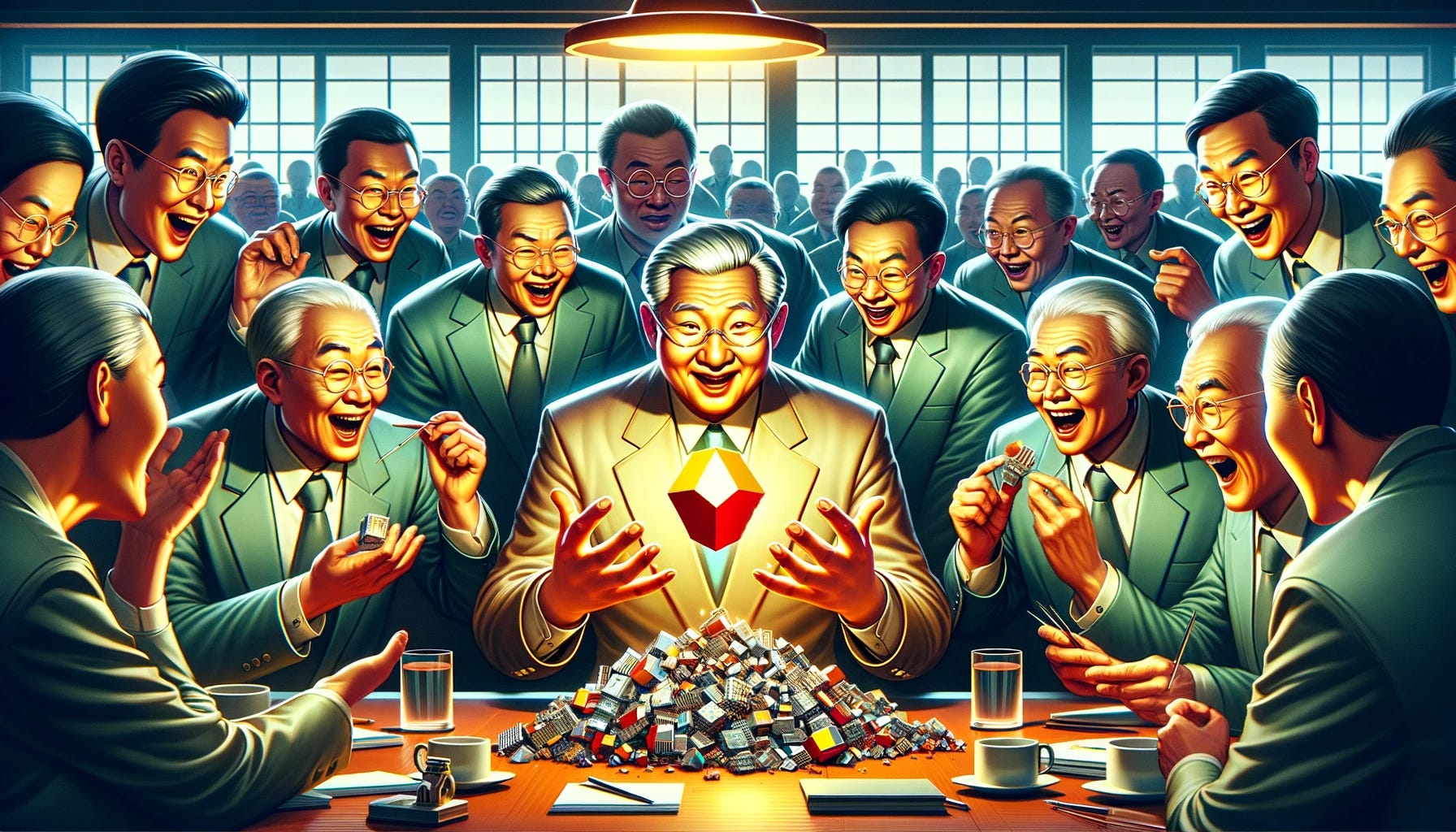
Meet the rare earth elements, China's silent weapons of mass technological destruction (well, not quite destruction, but you get the point).
Imagine a world where one nation controls the lion's share of minerals crucial for modern technologies, from smartphones to wind turbines to electric vehicles. Without them, the tech revolution grinds to a halt.
We're about to descend into a thrilling expedition, unearthing the story of China's rare earth dominance, meeting the mining titans, and cracking the code of this hidden kingdom which is the cornerstone of the high-tech industry worldwide.
..
Before we move ahead, do join my 17k member big Biz News+ community on WhatsApp.
..
Early Discoveries and Industrial Apathy (1927-1972s):
Rare earth elements were identified in China as early as 1927.
However, significant industrial interest in these elements only emerged post-1970s.
..
The Vision of Xu Guangxian (1972-89):
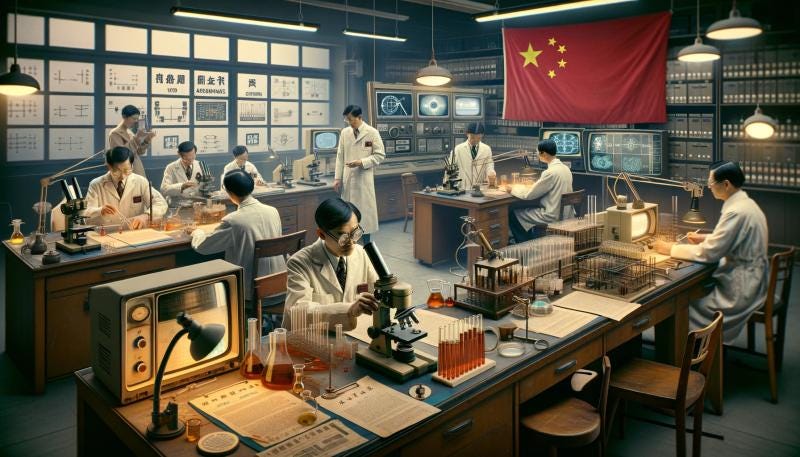
The growth trajectory changed with the entry of chemist and academician Xu Guangxian, considered the founding father of China's rare earth industry.
He is the one who recognized the potential of rare earths in technology and advocated for their domestic reservation to the Chinese Communist Party (CCP).
And as the CCP began to understand his study, it asked Xu to study and devise a process for the extraction of rare earths in 1972. And, in a decade, his efforts dramatically reduced the time and costs involved in the extraction of such minerals.
To back this sector with more research and development in this domain, in 1986 Xu founded a major research centre for rare earths study. This was followed by a Government-backed laboratory which Xu founded in 1989.
..
State-Owned Enterprises Enter (1990-2010):
Following this, the increasing Government interest in the space coupled with the advancements achieved by Xu’s research centre and laboratory drove a strategic shift, channelling resources into the sector.
China, recognizing the strategic value of rare earths, woke up state-owned enterprises like Minmetals, China Northern Rare Earth Group and China Nonferrous Metals Group (CNMG) to the task. And they went in, extracting, processing and refining rare earths at an unprecedented scale.
So much so that by the end of the 2000s, China's output represented about 95% of the global supply, leaving competitors like the US and Europe scrambling for the remaining crumbs.
This was a quantum leap from its earlier market share.
..
2010: Cementing Global Dominance
As the new millennium saw China tightening its grip on the REE market. The juggernaut powered by its state-owned champions was unstoppable.
Hence by 2010, China was producing a staggering amount of rare earths annually, commanding over 95% of the global market.
The dragon’s dominance extended beyond mining to refining and processing them into magnets, all the crucial steps in making those minerals usable.
Picture a resource monopoly, shaping the trajectory of tech giants and entire industries.
And yet, the world was practically sleeping while all of this was happening.
..
China's Sudden Muscling Up Wakes The World!
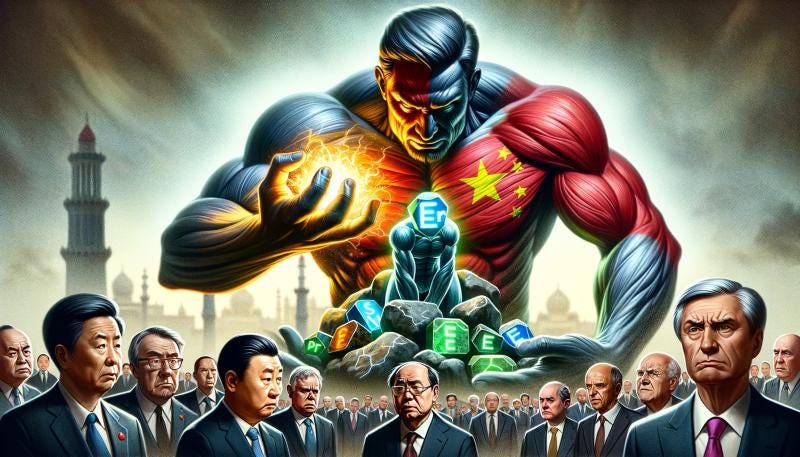
But then in December 2010, China rocked the world by announcing sweeping restrictions on the export of rare earth minerals and their derived magnets to the world.
Following strong head diplomacy by the US, the restrictions were taken back. But, the message was clear. And this thus ended up being a watershed moment, with the world waking up to the rude awakening that the dragon's massive grip on the global rare earths supply chain was a threat to their own strategic and national interests.
And that finally got the Governments in the US, Australia, Japan et cetera to pace up.
..
But, There was Another Problem.
For decades, only China had accounted for all advancements in the mining and extraction of rare earths.
Thus, China did not just hold a tight grip on the production, refining and processing of rare earths, but also on the technology and machinery used in each of these stages.
Hence, despite the acknowledgement by the world that China's dominance in this space was an issue, they could not change much.
And this is evident from where the Chinese dominance stands today.
..
State-Owned Giants Become Global Giants
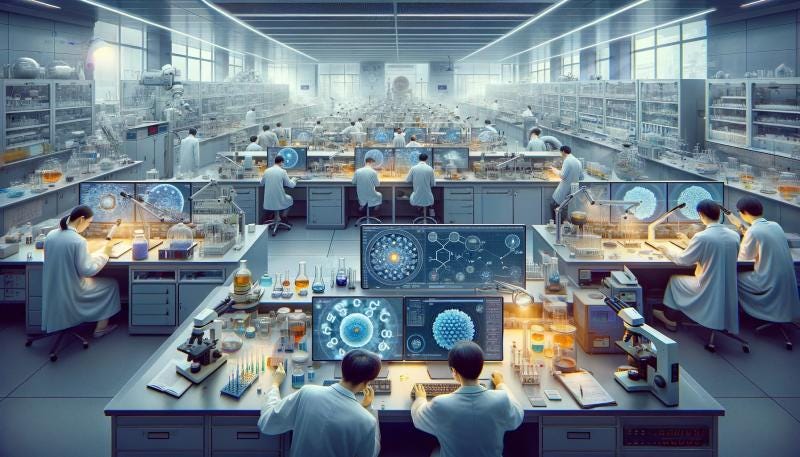
While the Chinese dominance has come down from 95% in 2010, it remains north of 90%.
A single Chinese state-owned company called Minmetals today controls over 30% of the global rare earth market, owning mines, refineries, and even downstream businesses.
Another state-owned major, CNMG also boasts extensive mining and refining operations, supplying rare earths to manufacturers across the globe. And there are more such Chinese Government-backed entities.
Despite having a smaller percentage of global reserves (approximately 38%), powered by such players, China’s production eclipses that of other nations by wild proportions.
And that gives China significant geopolitical and economic leverage.
..
The Points to Note
Industry Consolidation: A significant move in 2021 was the merger of major state-owned enterprises to form the China Rare Earth Group, making it the world's second-largest rare earths producer. This consolidation is part of Beijing's strategy to gain greater control over industries of strategic importance.
Dominant Players: The rare earth industry in China is led by Government-owned giants like the Inner Mongolia Baotou Steel Rare-Earth Hi-Tech Company, China Minmetals in the south, and the newly formed China Rare Earth Group.
Policy Shifts and Environmental Focus: Recent meetings chaired by Premier Li Qiang have emphasized the need to further consolidate the leadership by betting on high-quality and green development of the rare earth industry via better refining efficiencies using technology, and a push for refining of rare earths.
..
Global Implications
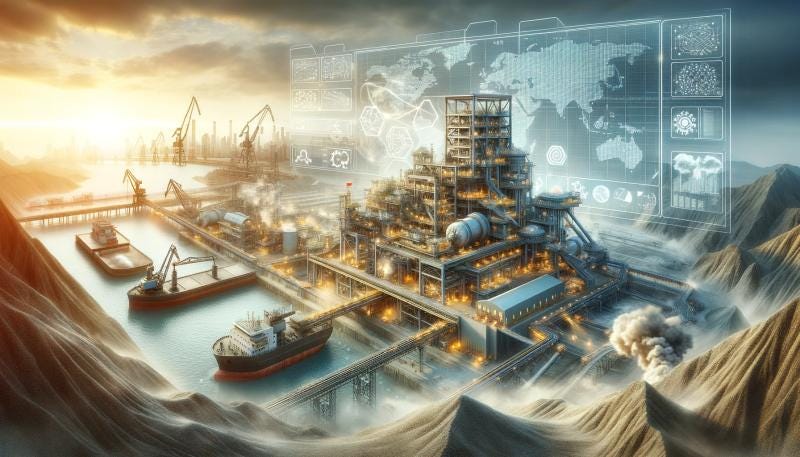
This monopoly over rare earth elements has far-reaching implications.
As aforementioned, rare earths are critical in manufacturing diverse products, from smartphones and electric vehicles to fighter jets and other military hardware.
For example, the US Defense Department relies heavily on these elements, with China being a primary supplier for over 80% of the US’ overall rare earth consumption.
And, China's repeated misuse of its monopoly to impose various export restrictions has spurred efforts in other countries to restart their rare earth industries, indicating the global reliance on Chinese sources.
The repeated moves by China to raise prices have only strengthened the scramble to find alternative sources or reduce rare earth usage.
..
Looking Ahead
China's ascendancy in the rare earth sector is a testament to strategic resource management and market control.
This dominance is both an economic asset and a geopolitical tool. As the world increasingly relies on technology, the significance of China's control over these critical resources only magnifies.
..
Subscribe and stay tuned for more updates in this fascinating saga of studying China’s rise!
See you tomorrow morning 7.30 am with another edition.
Best,
Heyy I really loved your article and found it to be really insightful.... Really great content.... Although I would like to suggest that if you can include a list of the top 5 or top 10 Rare Earth Minerals and write 1 or 2 liners about them, it would help us understand the world of Rare Earths better.
Interesting facts and figures like China controlling 98% of the world's Gallium production and 60% of the Germanium production or things like Antimony having critical military applications for example in Night Vision and Laser Guided Missile Systems could have made the article more interesting and insightful.
Nonetheless, I'm a big fan of your work and really appreciate what you're doing for all of us readers. Kudos 🙌